
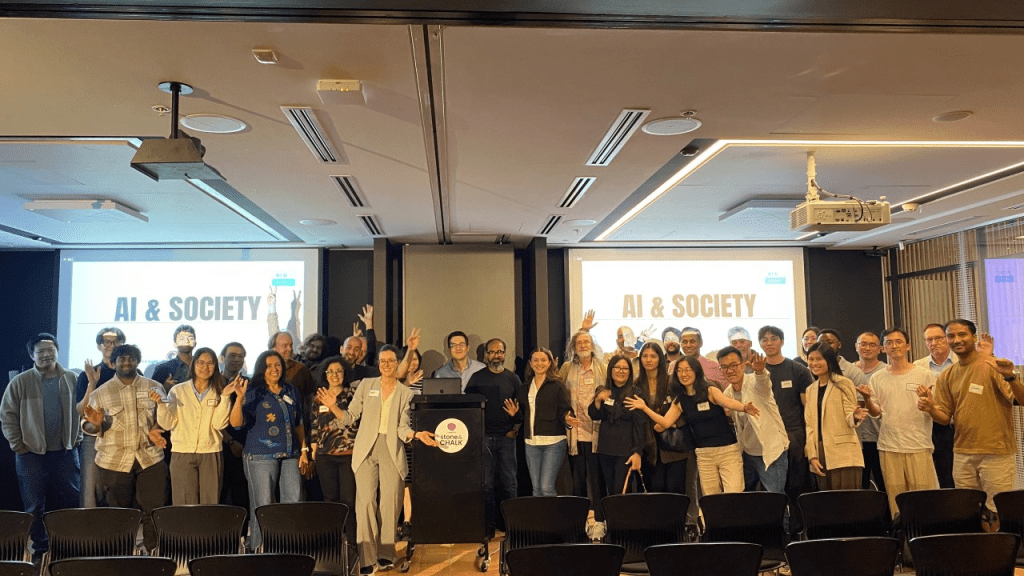
This piece reflects on the first year of building AI & Society across Australian cities, and why local, place-based conversations matter as AI becomes increasingly centralised.
Reflections from One Year of AI & Society
In December 2024, AI & Society began as a simple idea: to create a space where people could come together to talk about artificial intelligence not just as a technology, but as a societal force.
By January 2025, that idea became our first event. Twelve months later, AI & Society has grown into a community.
- 39 events
- 2,298 attendees
- 2,932 community members
- 95+ hours of facilitated conversations
- Events across Brisbane, Melbourne, Sydney, Adelaide and Perth
The numbers only tell part of the story. What this year has reinforced, is that place matters.
Where this perspective comes from
My perspective on AI & Society hasn’t emerged in isolation.
My professional background was shaped by working in and with cities — particularly around community, place-making and how people experience change at a local level.
Working in city contexts teaches you something fundamental: place and community are inseparable.
Cities are not just collections of infrastructure, policies or technologies. They are living systems made up of people, relationships, histories and shared spaces. The way a city is designed, governed and experienced directly shapes how people connect, participate and imagine the future.
That lens has shaped how I view technology.
It’s why I do see AI as something that can be meaningfully understood purely through a technical or global lens. Technology lands in places. It is adopted by communities. It interacts with existing social structures, power dynamics and local culture.
- Change is experienced locally, not abstractly
- Trust is built through relationships, not announcements
- Progress depends on participation, not just expertise
The sense of place shapes the questions people ask about AI. Community shapes how willing people are to engage, challenge and learn together.
What the past 12 months have reinforced — again and again — is that place matters, not as a backdrop to innovation, but as an active force shaping how societies respond to it.
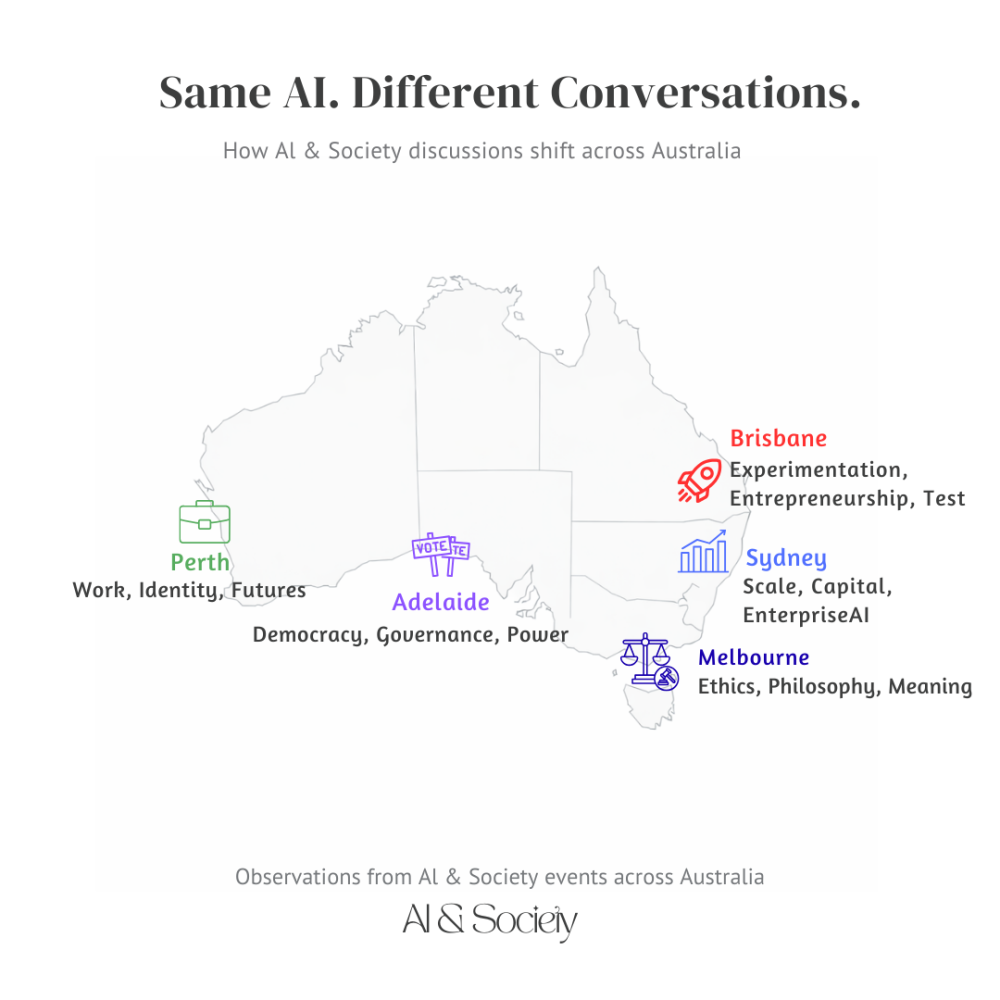
As AI & Society travelled across Australian cities, this became increasingly visible. The same technology prompted different conversations — shaped by local culture, priorities and lived experience.
Cities shape how we think about AI
Cities are not neutral backdrops for innovation. They shape our values, priorities, institutions and lived experiences — and in doing so, they shape how we understand and engage with technology.
As AI & Society has travelled across Australia, one thing has become clear: the same technology sparks very different conversations.
This isn’t about stereotypes. It’s about culture, demographics, local industries, and policy environments — the forces that shape what each city cares about most.
(Based on conversations and events over the past year.. high-level observations only!)
- Brisbane conversations often feel very hands-on. People are experimenting, trying tools, learning by doing, and asking how AI can help individuals, startups and small teams get moving.
- Sydney discussions tend to zoom out to questions of scale — capital, enterprise adoption, commercialisation, and how AI fits into larger organisations and global markets.
- Melbourne often leans into the deeper questions — ethics, philosophy, meaning, and what AI says about humanity, values and how we want to live.
- Adelaide brought the conversation back to democracy and governance — who holds power, who benefits, and how public institutions and civil society should respond.
- Perth centred on work and identity — how AI is changing livelihoods, purpose, and the kinds of futures people want to build.
The technology may be global — but the conversations are deeply local. This is not a weakness of decentralised dialogue. It is its greatest strength.
Which conversation is dominating where you are? Let me know!
AI is becoming more centralised — and that changes the stakes
At the same time as these local conversations are unfolding, AI itself is becoming increasingly centralised.
Data, compute, infrastructure and decision-making power are concentrating in the hands of a small number of global organisations. This raises fundamental questions:
Who understands the systems shaping their lives? Who has agency to question or influence them? Who benefits — and who is excluded?
The risks are not only technical. They are civic, social and democratic.
In this context, local conversations are no longer optional. They are essential infrastructure for a healthy AI future.
Why local, place-based dialogue matters now
While AI systems may be developed at global scale, their impacts are felt locally — in workplaces, schools, hospitals, councils, businesses and everyday life.
Local, community-led conversations create:
- Knowledge and awareness, cutting through hype and fear
- AI literacy, enabling people to use tools responsibly and critically
- Leadership capability, so decision-makers can better leverage AI in the public interest
- Civic capacity, allowing communities to engage with questions of power, rights and governance
- Resilience, so people are not passive recipients of technology, but informed participants in shaping its use
AI & Society exists to support ground-up understanding, not top-down narratives.
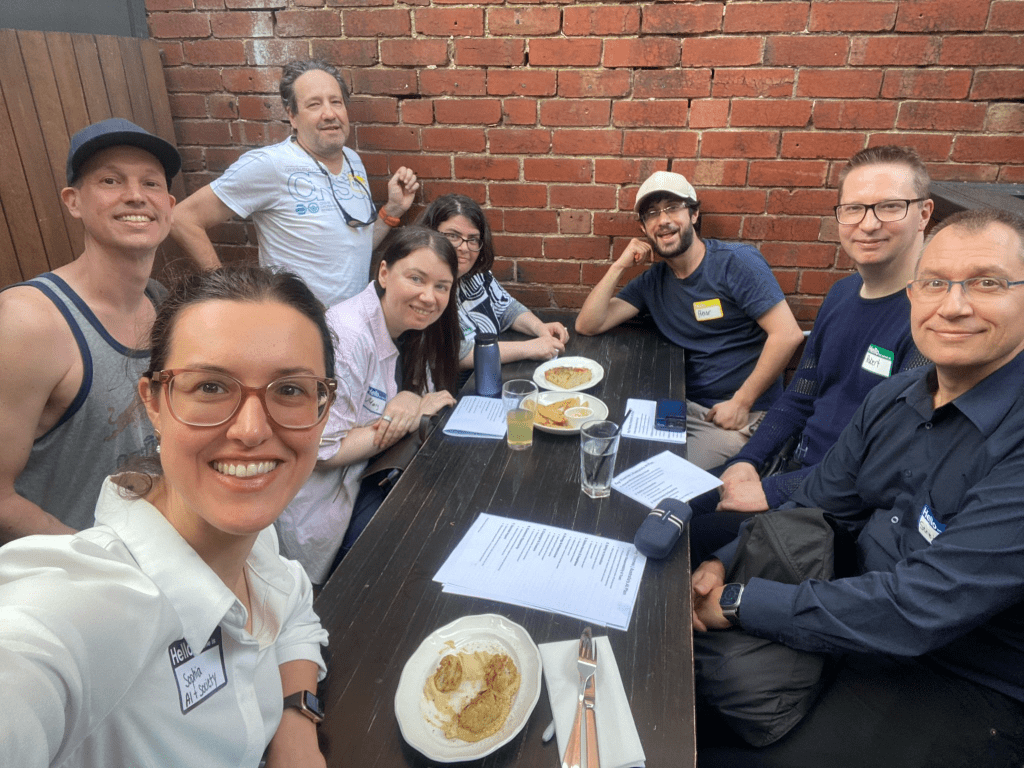
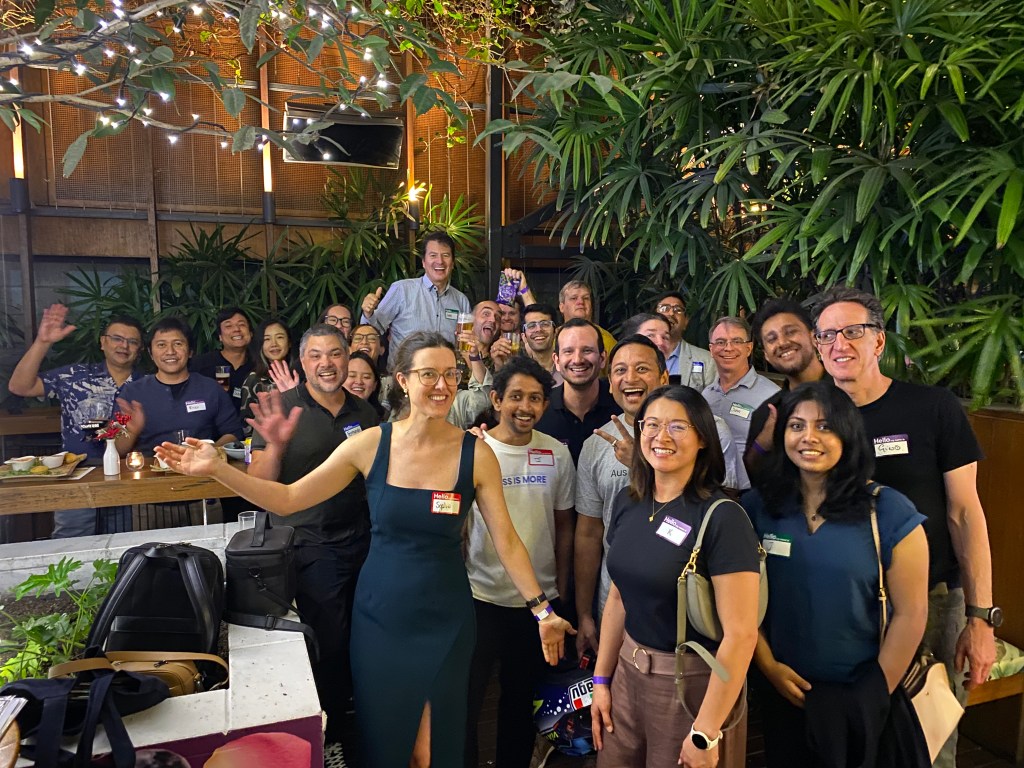
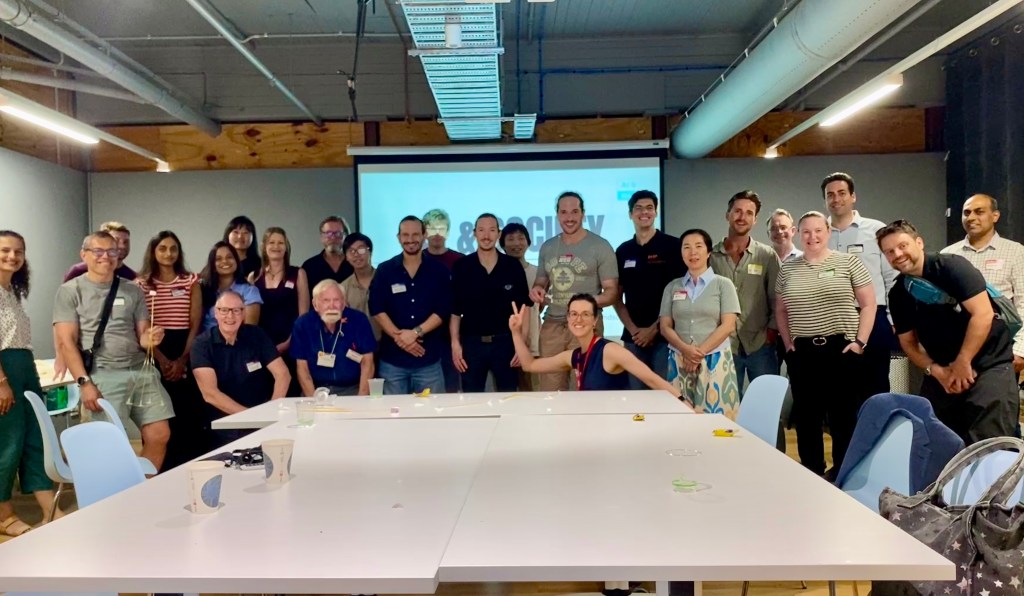
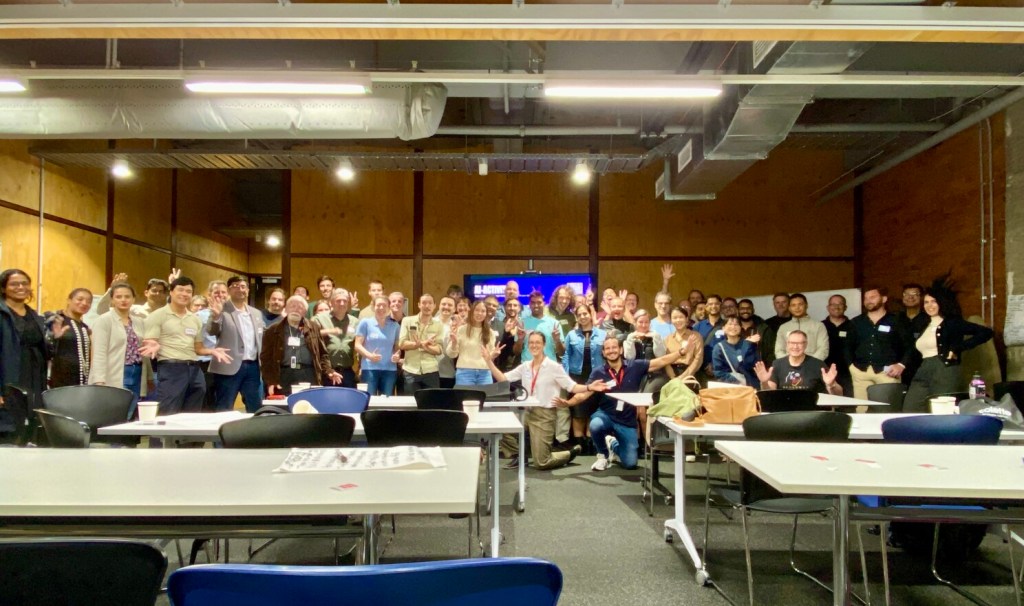
Through workshops, seminars, roundtables, informal pub conversations and run-and-coffee clubs, this work has been built on:
- Hundreds of sheets of butcher’s paper
- Countless Mentimeter questions
- Group sense-making, disagreement, curiosity and learning in public
This is what civic AI engagement looks like in practice.
A community built by people
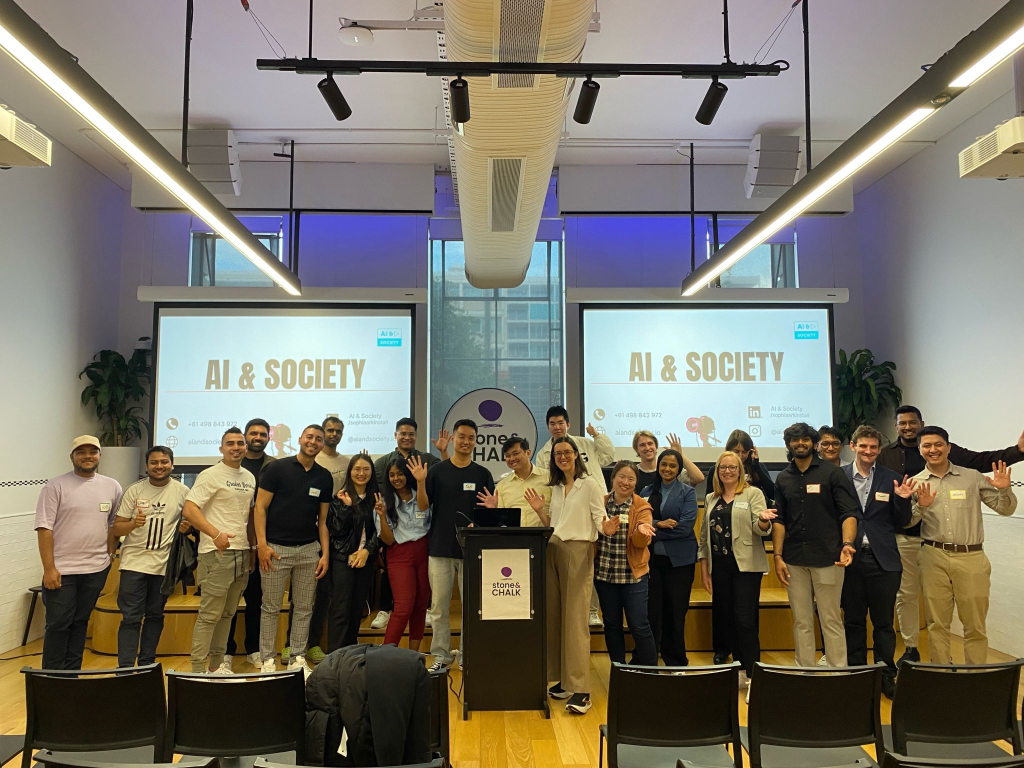
AI & Society would not exist without the curious, generous and thoughtful humans who show up.
A sincere thank you to:
- All guest speakers who shared their expertise, research and lived experience
- All attendees and community members who contributed their questions, perspectives and trust
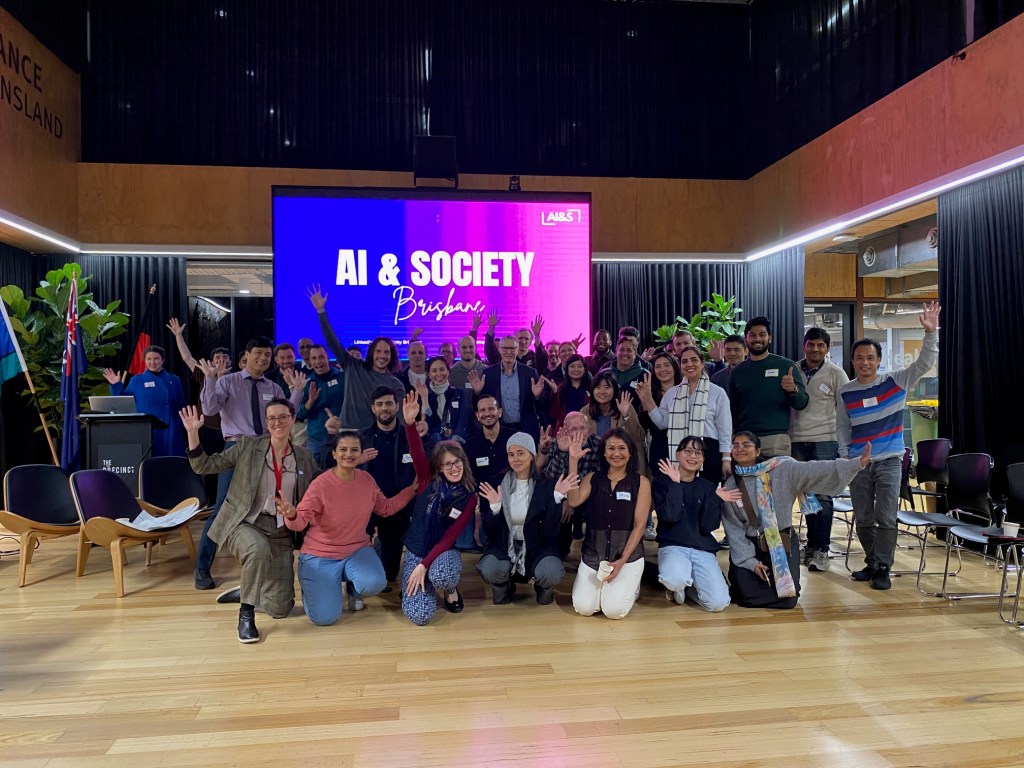
- Our venue and ecosystem partners, including The Precinct and Stone & Chalk
- The volunteers and collaborators who helped make this work possible across cities
This community is proof that meaningful engagement with AI does not require everyone to be technical — it requires people to be informed, reflective and willing to participate.
Looking ahead
AI & Society will continue into 2026 with the same core belief:
The future of AI should not be shaped by technology alone. It must be shaped through inclusive, locally grounded, human-centred conversation.
By strengthening local knowledge, awareness and education, we can better empower people to:
- Leverage AI thoughtfully
- Lead responsibly
- Protect human values, rights and social cohesion
The work continues — city by city, conversation by conversation.
If you’re thinking about how AI shows up in your city, workplace or community, I’d love to hear your reflections. Feel free to comment or share how these conversations are unfolding where you are.
— AI & Society
 AI & Society