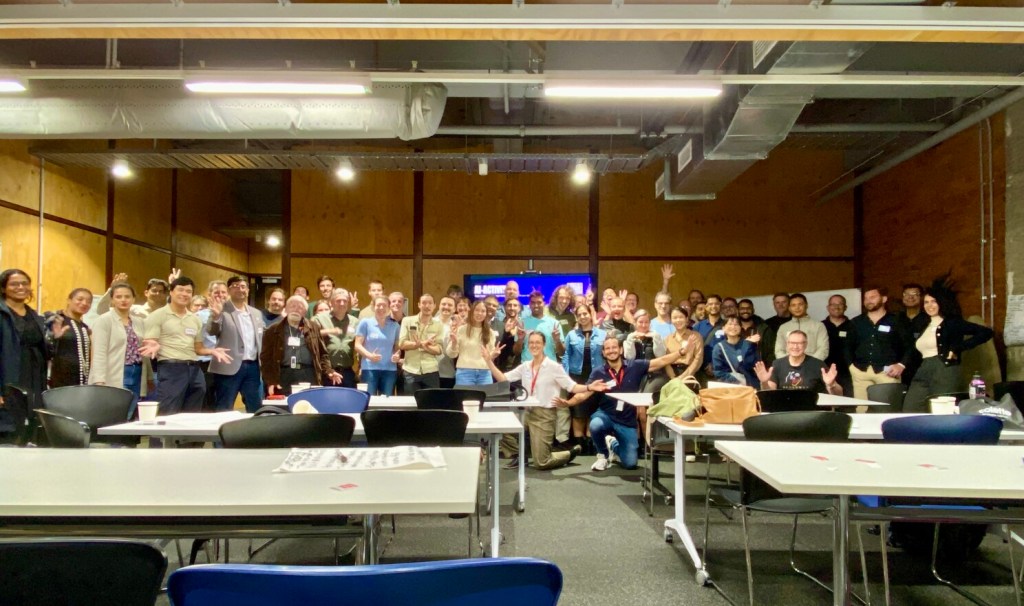
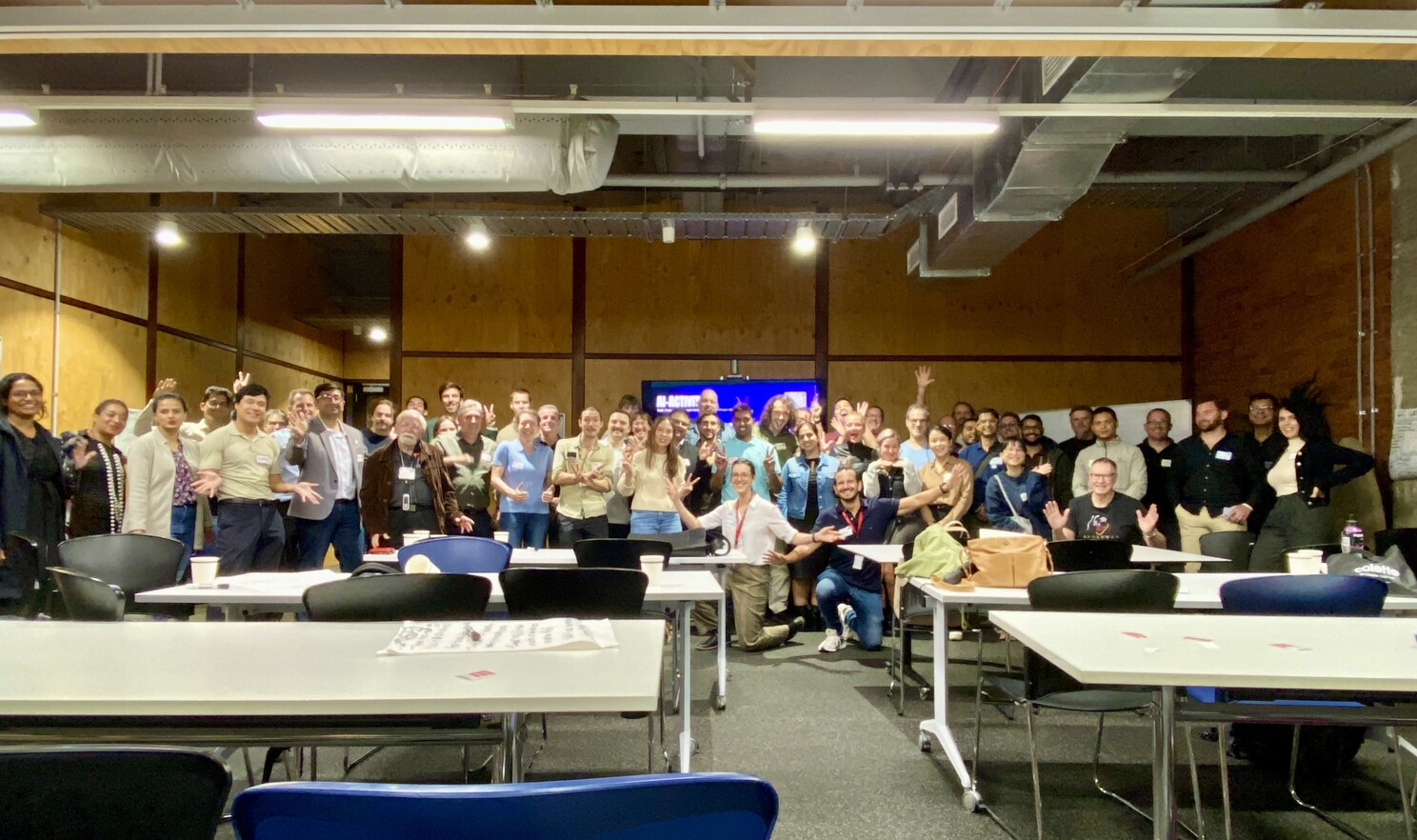
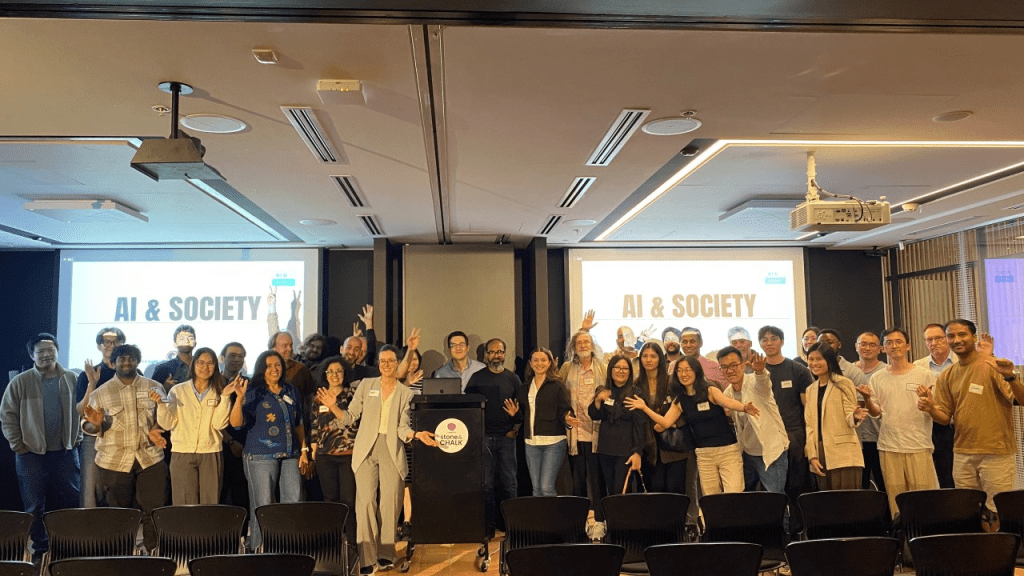
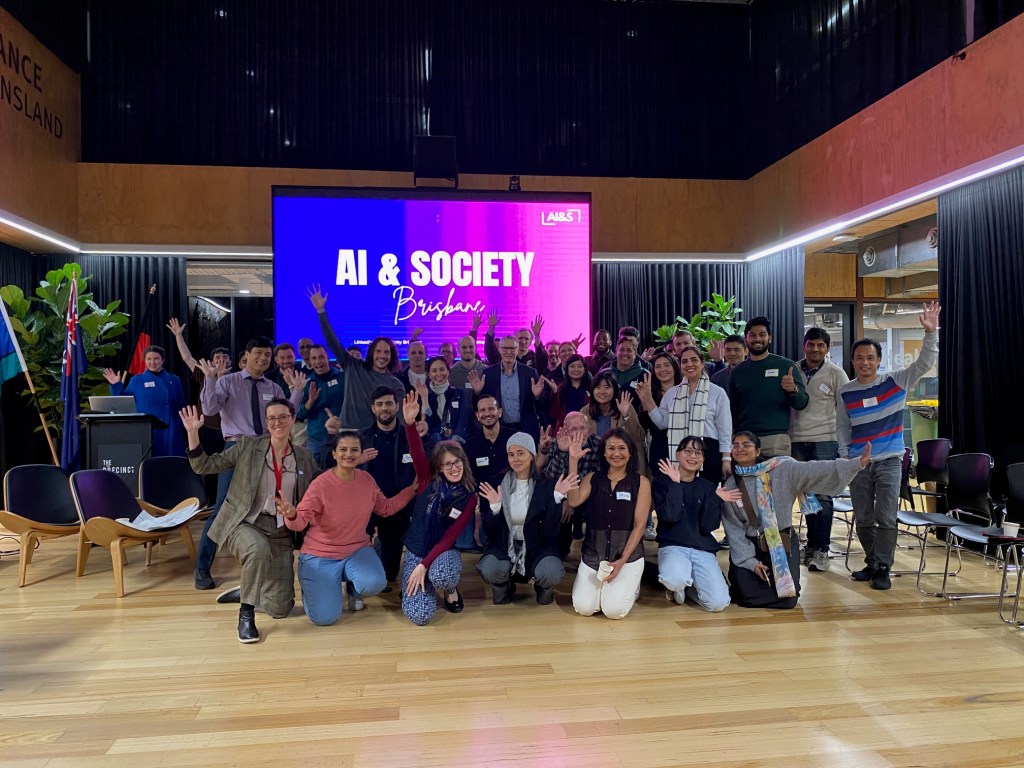
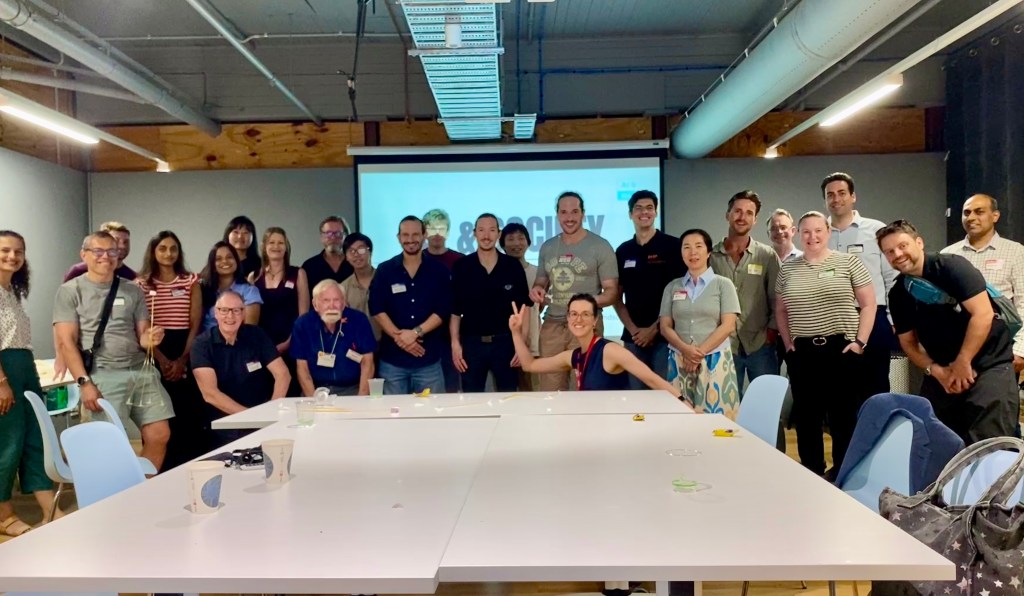
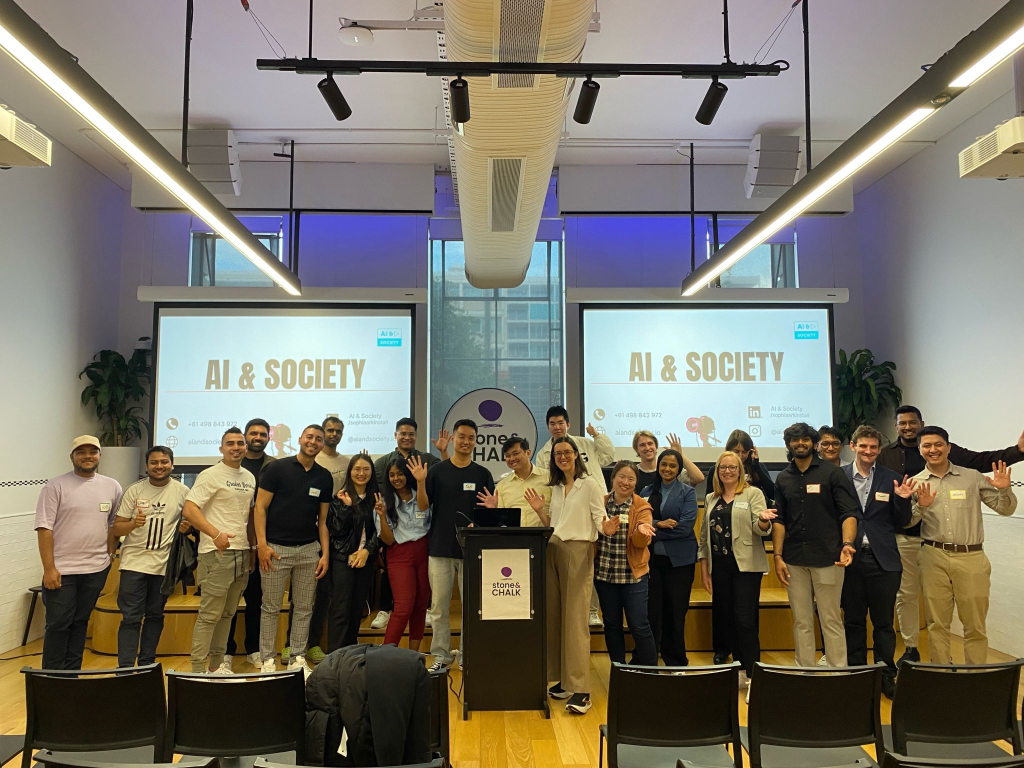
In May, I hosted the biggest AI & Society event to date — and what an incredible evening it was! Hosted in Brisbane at The Precinct, it was awesome to see so much engagement!
The theme for May was AI in Education, and the energy in the room reflected just how important and urgent this topic is for educators, technologists, students, and innovators alike.
🧭 Who was in the room?
We began the night with a dot polling exercise, inviting participants to share a little about themselves. Here’s what we discovered:
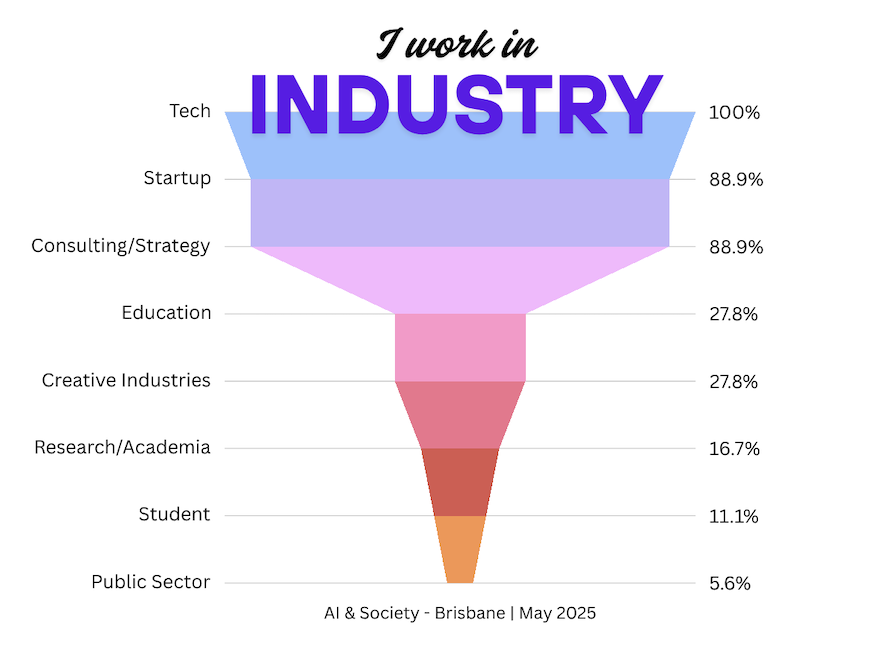
💼 I work in…
- Tech – 18
- Startup – 16
- Consulting/Strategy – 16
- Education – 5
- Creative Industries – 5
- Research/Academia – 3
- Student – 2
- Public Sector – 1
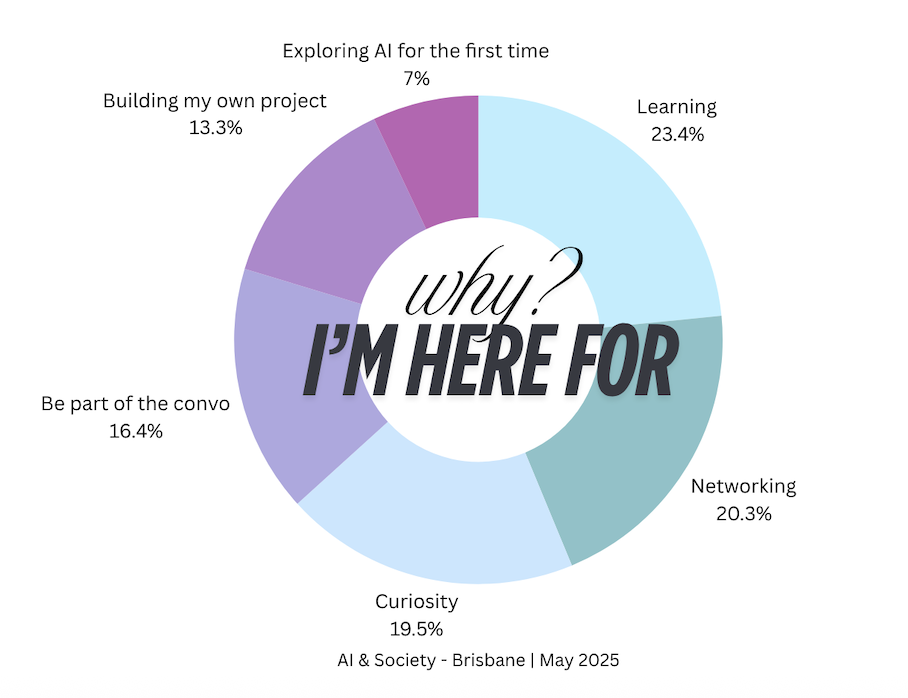
🎯 I’m here for…
- Learning – 30
- Networking – 26
- Curiosity – 25
- Contributing to the conversation – 21
- Building my own project – 17
- Exploring AI for the first time – 9
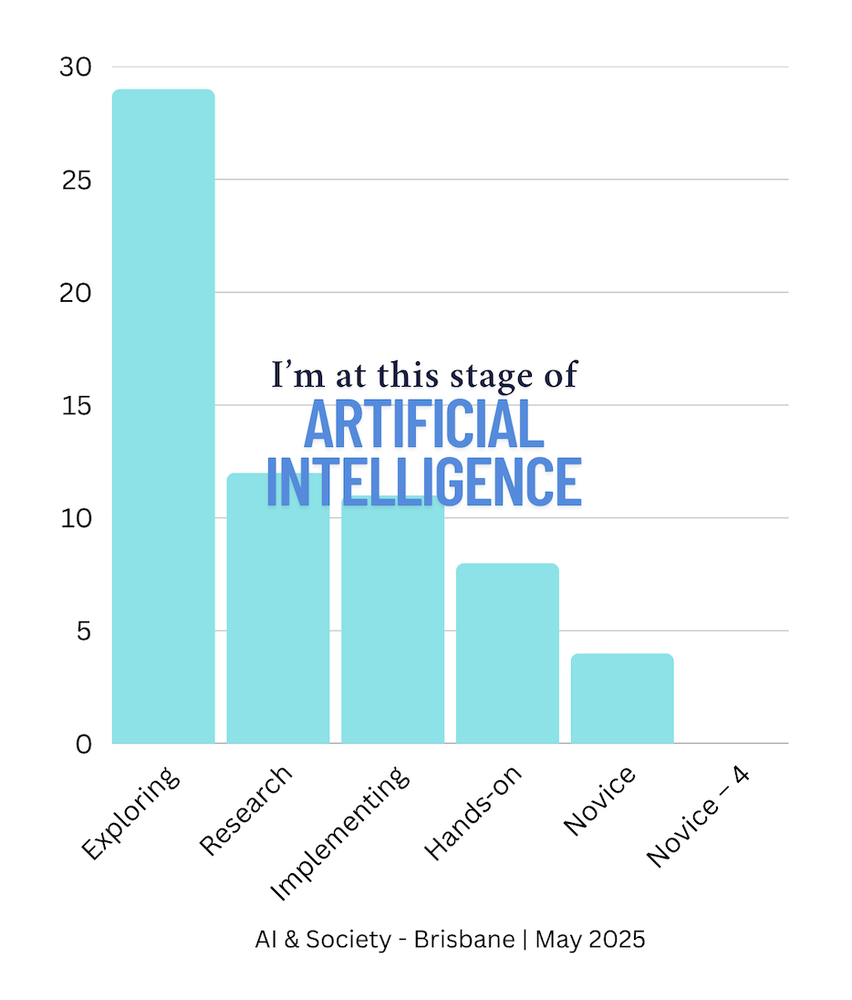
🧠 I’m at this stage in AI…
- Exploring – 29
- Research – 12
- Implementing – 11
- Hands-on – 8
- Novice – 4
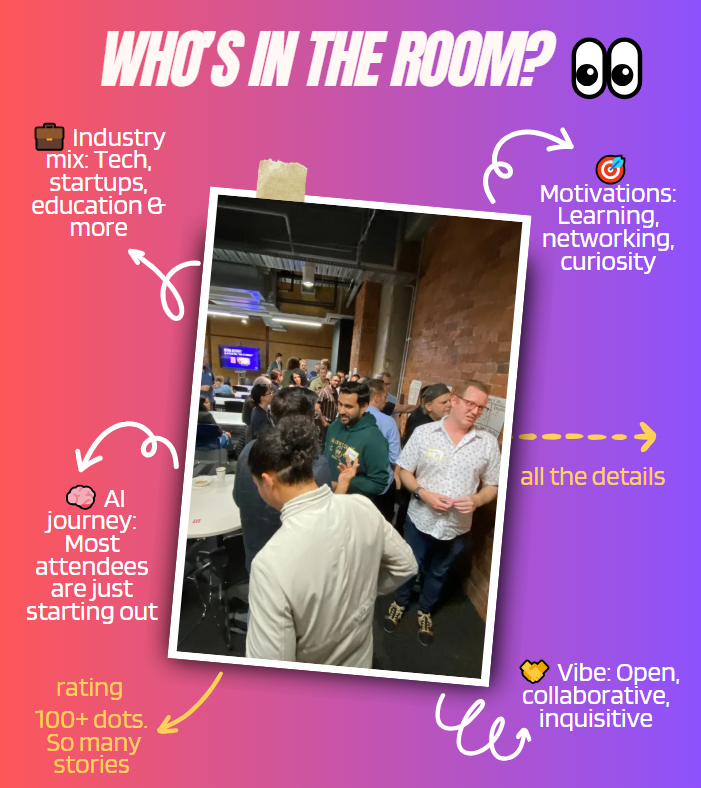
A diverse, cross-sector community, united by a shared curiosity and eagerness to shape the future of AI in ethical, thoughtful ways.
🎤 What we explored
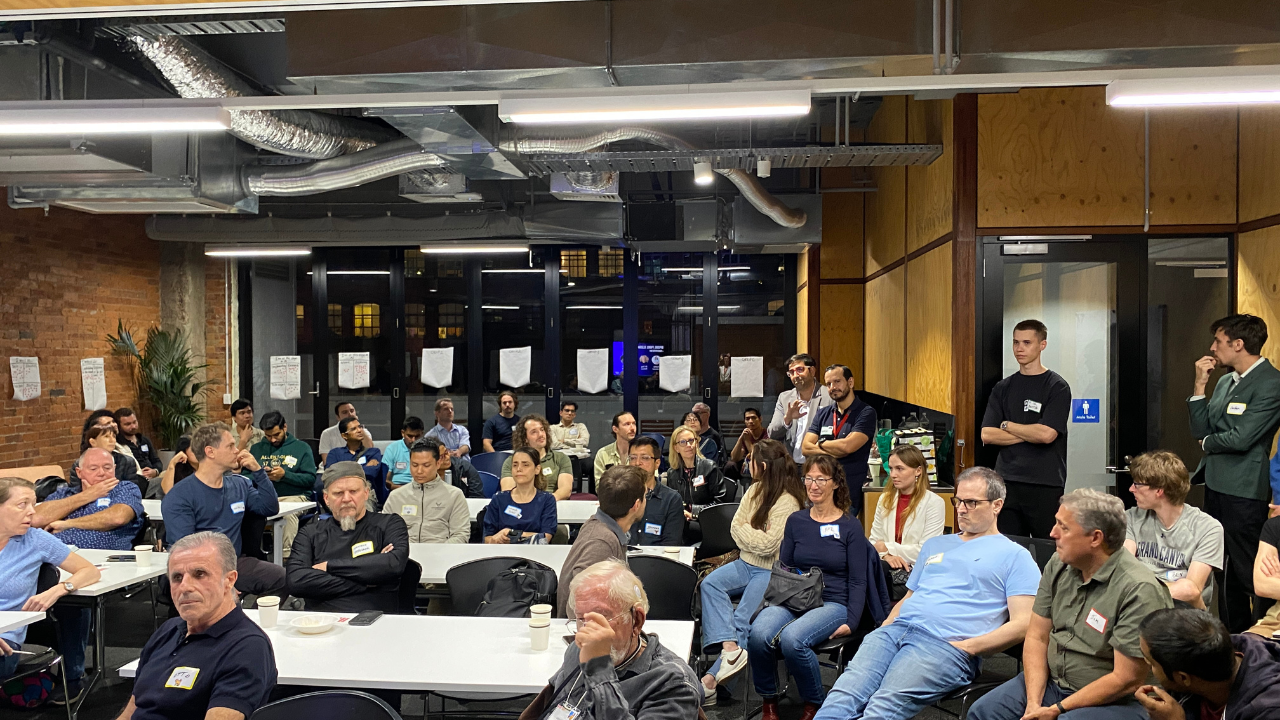
We were privileged to hear from an outstanding panel of speakers:
- John Crook – CEO & Founder, Rule 30
- Dinesh Poorun – Co-founder, Rapid AI4Learning
- Dr Troy Neilson – CEO, Yarta
Together, they tackled some of the most important questions facing the future of education:
- Is AI a tool, a teammate — or both?
- How is AI shifting classrooms, assessments, and lifelong learning?
- What jobs of the future are we preparing students for?
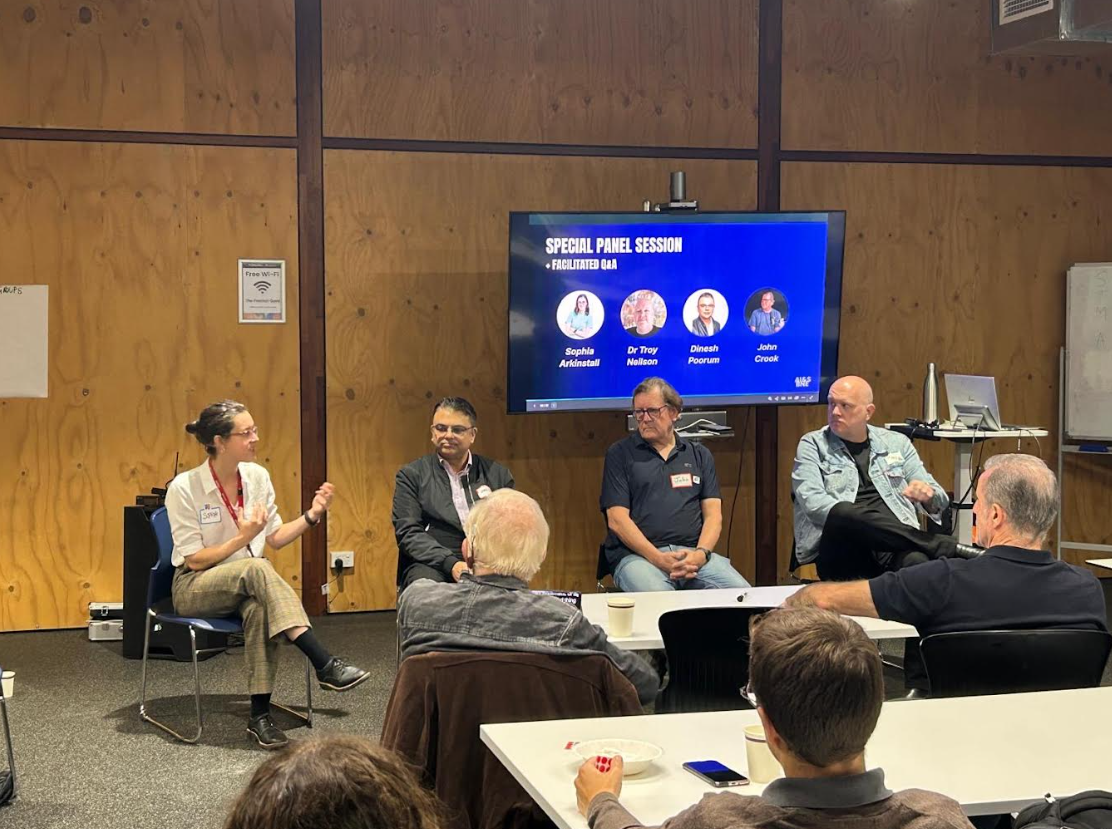
The conversation sparked thought-provoking questions from the audience — and plenty of healthy disagreement too!
🧩 Group workshops: 9 provocations
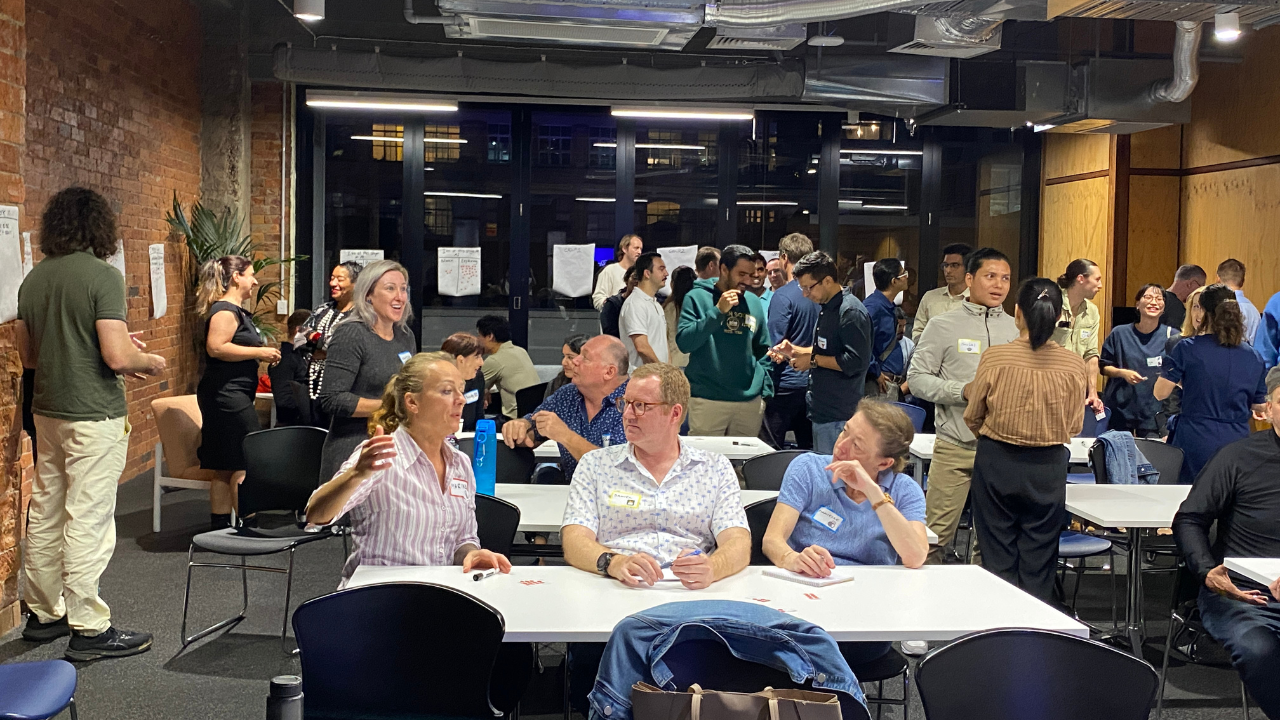
After the panel, given the number of people, we broke off into nine small groups to explore one of these big questions:
- 🧠 Human Strengths What skills should we teach that AI can’t replace?
- 🌍 Inclusive Learning How might AI support inclusive and personalised learning?
- 🤝 AI’s Role Should AI be a co-teacher, a tool, or a student?
- ⚠️ Risks & Responsibility What are the risks of AI in education — and how do we manage them?
- 📘 AI Literacy What does ‘AI literacy’ mean — and who should teach it?
- 🏫 Changing Role of Educators Will teachers become facilitators, curators, coaches?
- 🇦🇺 Local Values How do we ensure AI in education reflects local needs and culture?
- 🎓 Students Using AI What happens when students use AI as a learning partner?
- 💡 The $10M Idea If you had $10 million to design an AI learning tool, what would you build?
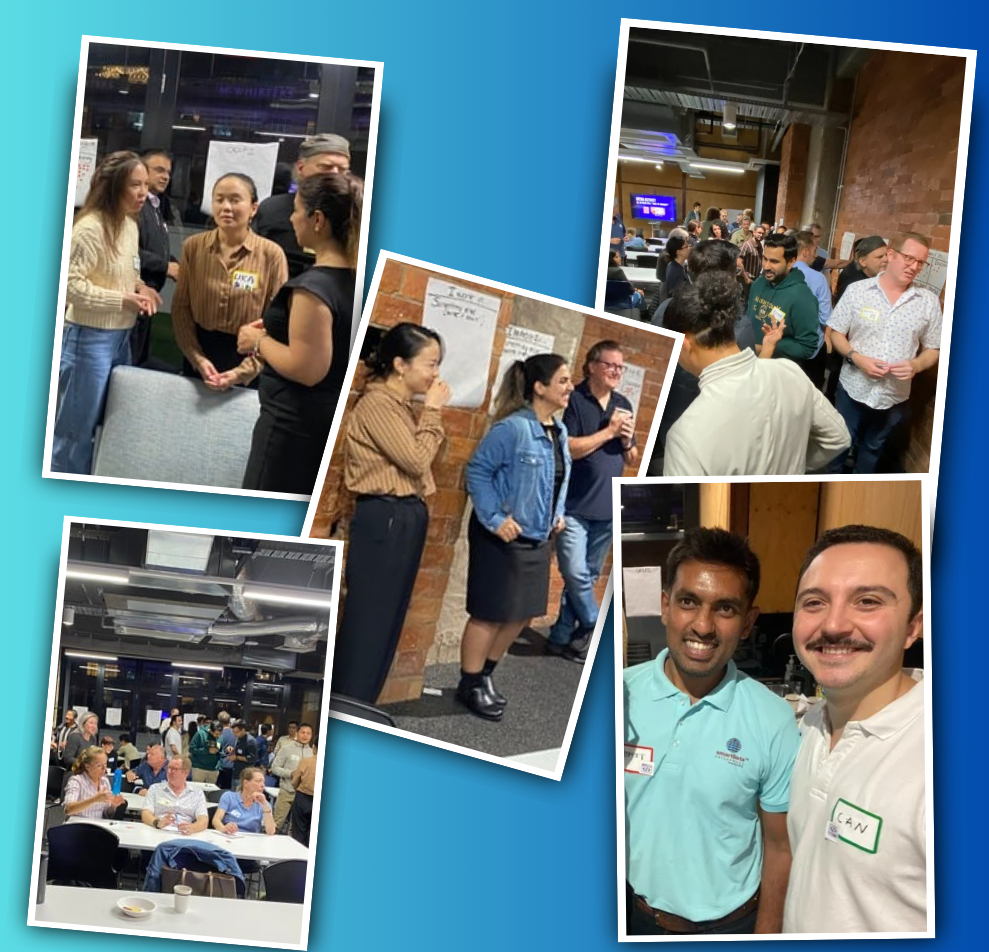
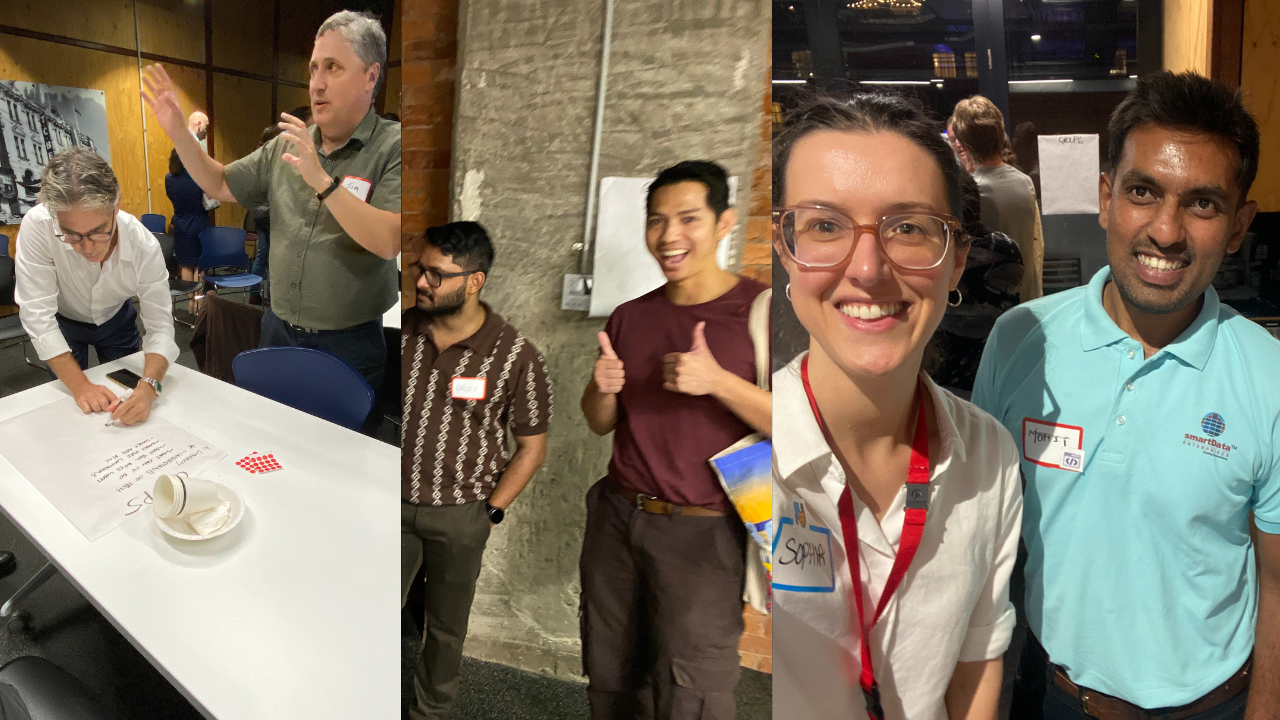
The creativity flowed — with butcher’s paper and passionate dialogue. These discussions unearthed some powerful ideas we hope to carry forward and tie into future sessions.
🧩 What the Groups Said – Workshop Insights from AI & Society – Brisbane
After our panel, we invited attendees to form nine groups and explore one big question each. Here’s a snapshot of the themes and insights that emerged:
🧠 Group 1: Human Strengths
Question: What skills should we teach that AI can’t replace?
- Human/interpersonal interaction.
- Dealing with random, unusual situations.
- Critical thinking and ethical reasoning – questioning answers, able to make personal decisions quickly.
- Surfing and dog training!
- Emotional intelligence, empathy, and relational communication are essential in leadership, education, and care professions.
- Creativity and the ability to ask the right questions — not just provide answers — were seen as future-proof, as long as the humanoid uses their mind for new and novel creations.
- Curiosity, adaptability, and lifelong learning were repeatedly raised as “un-automatable” human strengths.
🌍 Group 2: Inclusive Learning
Question: How might AI support inclusive and personalised learning?
- AI can adapt content to different learning styles, languages, and neurodiverse needs — but only if designed with inclusivity in mind.
- Potential applications in early childhood education, language learning, and accessibility tools.
- The student at the centre.
- Compared to other industries like health, education has been slower to personalise services and learning.
- Co-design with learners from diverse backgrounds as key to success.
- Concerns about bias in datasets and who AI is being designed for (or by).
🤝 Group 3: AI’s Role
Question: Should AI be a co-teacher, a tool, or a student?
- AI as a “co-teacher” sparked debate — seen as possible in administrative support or content generation, but not in relational pedagogy.
- As a “tool,” AI was widely accepted: useful for lesson planning, marking, feedback, and pacing.
- The “AI as student”, in continuous learning models where AI evolves and improves based on educator input.
- Overall, AI as a partner — not a replacement — resonated most.
⚠️ Group 4: Risks & Responsibility
Question: What are the risks of AI in education — and how do we manage them?
- Legal responsibility around AI.
- General misuse.
- Ensuring morals and ethics are part of this.
- Risk of negative disruption from too much change too quickly, not adapting fast enough.
- Significant risk of hallucinations leading to inaccurate learning.
- Impact on ability to think or write or communicate based on overuse of ‘tools’. Will students still be able to write themselves without prompting?
- Could AI cause larger gaps between learners (privilege).
- Misinformation, over-reliance, surveillance, and algorithmic bias were top concerns.
- The risk of reduced critical thinking if students lean too heavily on generative AI.
- Calls for transparent AI use policies in schools and clear ethical frameworks.
- Co-creation with students and teachers, rather than top-down adoption. A pathway to safer, more ethical deployment.
📘 Group 5: AI Literacy
Question: What does ‘AI literacy’ mean — and who should teach it?
- AI literacy should go beyond coding — encompassing data ethics, prompt design, model transparency, and algorithmic thinking.
- Should be embedded across subjects, not siloed in IT.
- Teachers themselves need upskilling — support and professional development will be critical.
- Students need to understand not just how AI works, but how it shapes the world.
👩🏫 Group 6: Changing Role of Educators
Question: How will AI change the role of the educator?
- Educators may shift from content deliverers to facilitators, mentors, and curators of AI-enhanced learning journeys.
- The human connection in classrooms was highlighted as irreplaceable.
- Empathy, contextual judgement, and value-based decision-making will become even more central.
- There were questions about how roles will shift in tertiary vs. primary/secondary contexts.
Group 7: Local Values
Question: How do we ensure AI in education reflects local values?
- Training model needs to be context aware. Seen as important.
- Possible to scale AI services to businesses, but how do you scale and personalise AI for a particular country in a model?
- AI tools often reflect global (especially US-based) norms — but education is deeply cultural.
- There’s a need for Australian-led AI models that embed local knowledge systems, diverse voices, and regional priorities.
- Local co-design and alignment with community needs were seen as non-negotiables.
- Government and educational institutions must take the lead in setting direction.
🎓 Group 8: Students Using AI
Question: What happens when students use AI as a learning partner?
- Helps students when explaining a concept, simple terms and providing context.
- Get a quick response from AI, avoiding the so called “silly questions” in front of peers or teacher/lecturer.
- Save the deeper questions for the teacher/lecturer.
- Possible negative, could be less discussion as students ask questions of AI instead of the teacher/lecturer.
- How can the lecturer/teacher gauge student aptitude in class?
- Can help reinforce learning.
- Can check criteria for assessments, ask “have I missed anything?”
- Where do you draw the line? Ethics important.
- Can support research and referencing.
- There’s a fine line between AI as a scaffold (supportive) vs. a shortcut (undermining learning).
- Responsible use needs to be taught, modelled, and assessed.
- Teachers need support in understanding what’s “authentic” learning in the AI age.
💡 Group 9: The $10M Idea
Question: If you had $10 million to design an AI learning tool — what would you build?
- A fun game.
- A custom teacher and personalised.
- AI understand body language.
- Can help with what to learn.
- Provides the opportunity to be happy, busy and challenged!
- Provides hands on experience.
- A mix between SLM and LLMs.
- Able to provide virtual experience and visual learning, immersive.
- Full immersive, words, audio, visual.
- Understands your life – very personalised.
- An ethical tutor agent that is bias-aware, transparent, and personalised.
- An AI-powered storytelling tool for kids that adapts to emotions and interests.
- A gamified AI platform for learning empathy and cultural intelligence.
- Tools co-designed by students and teachers to meet real classroom needs — not just tech company assumptions.
📸 See the highlights
You can find photos and reflections from the event on the 👉 AI & Society – LinkedIn page
🚀 What’s next?
🧠 AI & Society Workshop
📅 Wednesday, 11 June 🕠 5:30pm 📍 The Precinct, Fortitude Valley
Whether you’re a first-timer or a returning regular, we’d love to have you join us. These gatherings are a space for dialogue, learning, and action — no AI expertise required.
Until next time — stay curious, humanoids. 🤖
 AI & Society